At a press conference held on 18 November 2025, the Slovenian police presented a coordinated international criminal operation investigating online child sexual abuse, known as Mozaik 2025, which took place within the framework of the European Multidisciplinary Platform Against Criminal Threats (EMPACT). This is the third international operation under the name Mozaik, which represents a continuation of Slovenia's cooperation with the Western Balkan region and other partner countries.
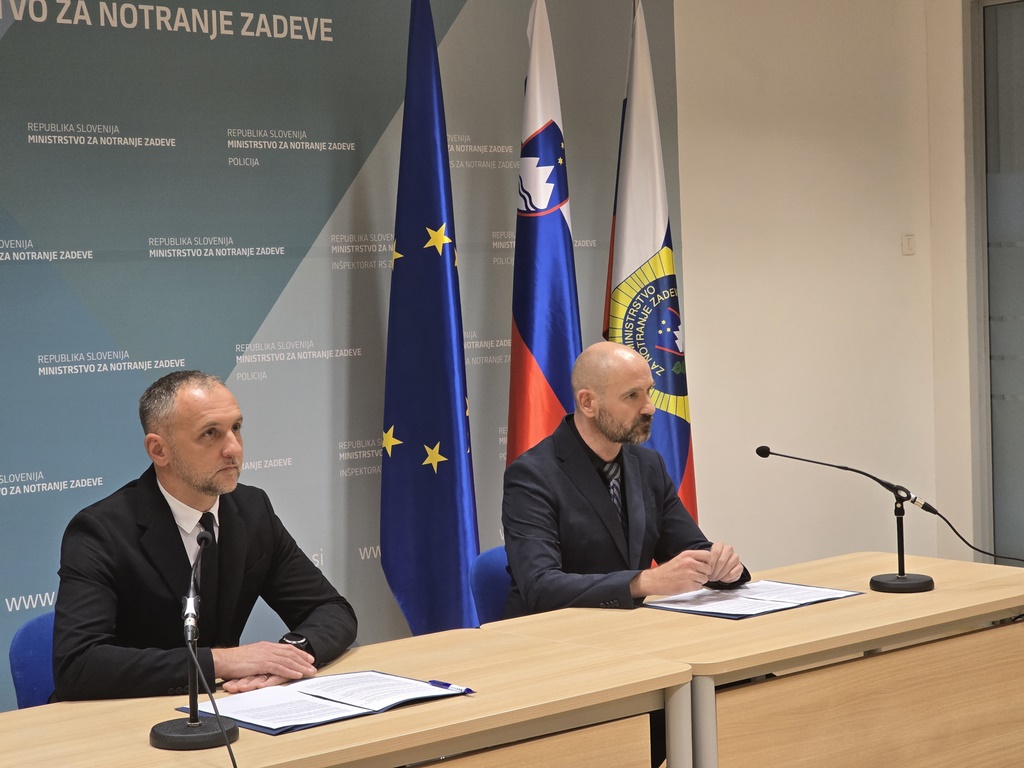
Primož Podbelšek (left) from the General Crime Section at the Criminal Police Division of the Ljubljana Police Directorate and Robert Tekavec (right), Head of Juvenile Crime Section at the Criminal Police Directorate of the General Police Directorate, presented the criminal investigation in detail.
From 2 to 13 June 2025, Slovenian criminal investigators took part in a coordinated international operation investigating online child sexual abuse. Based on their findings, criminal investigators from the General Police Directorate and from the criminal police divisions of six regional police directorates established that several Slovenian citizens had used Peer2Peer networks—platforms intended for the exchange of various images, videos, and other material—to obtain and distribute material depicting child sexual abuse.
Multiple criminal offences were identified involving the display, production, possession, and distribution of pornographic material depicting abuse of minors. The images and videos show minors being sexually abused by adults, as well as minors depicted nude.
According to the information gathered so far, Slovenian children are not among the victims. The investigation gave no indication that the suspects produced the material themselves or that they physically or sexually abused children.
The investigation and identification of suspected Slovenian citizens who distributed and acquired such material was conducted in cooperation with Europol. A part of the investigation was based on information obtained by Slovenian criminal investigators within the Peer2Peer network, which operates on the so-called open internet, where data about those who exchange content is publicly available.
During the investigation, criminal investigators obtained sufficient information to identify the suspects. Based on the investigation, seven Slovenian citizens residing in areas under the jurisdiction of the police directorates of Ljubljana, Koper, Celje, Murska Sobota, Maribor, and Novo Mesto were identified. All seven suspects had used Peer2Peer networks to commit the offences. One suspect had previously been convicted for a criminal offence against the sexual integrity of minors.
On the basis of court orders, criminal investigators carried out seven house searches targeting seven suspects on 5 June 2025 across the aforementioned police directorate areas, seizing 175 electronic devices and other data carriers, as well as several optical storage media. A total of 31 criminal investigators and police officers took part in the operation.
The investigation is still ongoing, as criminal investigators will continue to secure and examine all seized devices and analyse the vast amount of data. Once the investigation is complete, they will submit their findings to the competent state prosecutor’s offices.
Criminal offences against sexual integrity of minors are punishable by imprisonment for a term between six months and eight years.
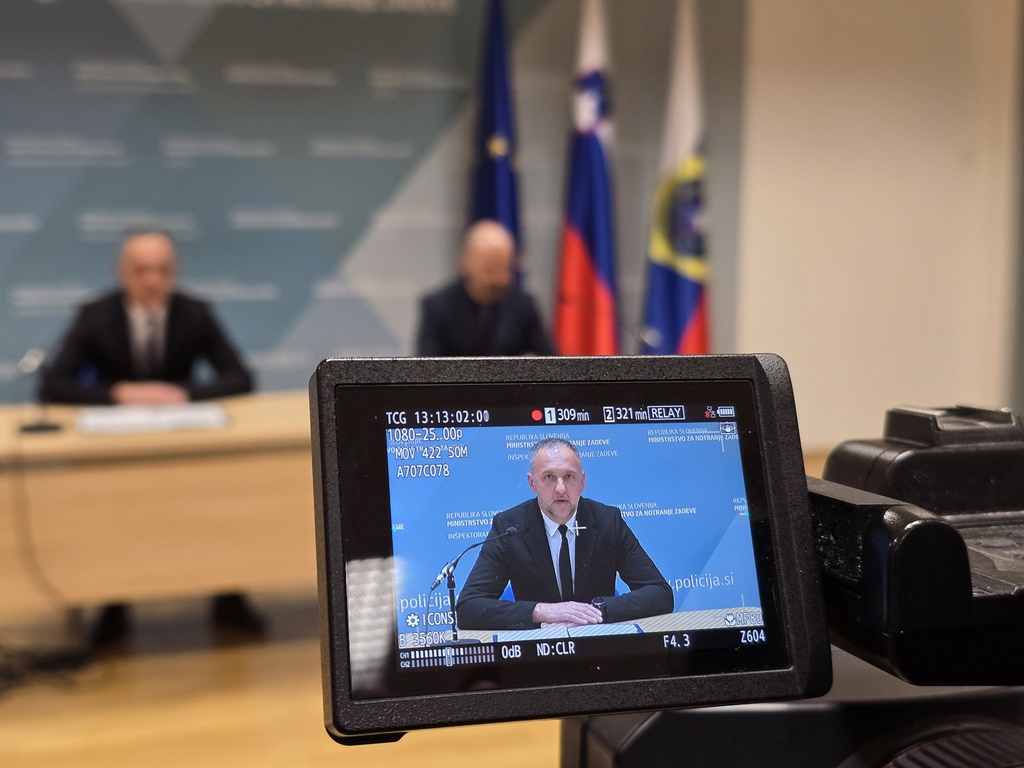
Slovenian police play a key role in bringing together Western Balkan countries in the fight against child sexual exploitation
The EMPACT operation, led by the Slovenian police together with Hungary, Croatia, and Europol, aims to strengthen cooperation with Western Balkan countries in the joint fight against child sexual exploitation. Slovenian criminal investigators were joined by colleagues from Hungary, Croatia, Serbia, Montenegro, North Macedonia, Bosnia and Herzegovina, and Albania. From 2 to 13 June, criminal investigators conducted 44 house searches targeting 46 suspects and seized a total of 393 electronic devices. To date, 13 child victims of sexual abuse have been identified and rescued. However, the work continues, as investigators are still trying to identify the remaining children depicted in the seized materials.
At present, there is no evidence suggesting that the suspects are connected, but investigators will continue to examine possible links. Online child sexual abuse offenders often connect with one another, exchange material, and share advice on how to abuse children, remain anonymous, avoid detection, and operate across borders. In the Western Balkan region, this is facilitated by fewer language barriers.
The Slovenian police, together with Europol, Hungary, and Croatia, have been leading the Western Balkan operational action network for five years. During this period, we have established an effective environment for joint work: creating a network of experts, providing training, conducting preventive activities, and planning operational measures. The aim of our cooperation is to detect, investigate, and prevent child sexual abuse in both virtual and physical environments. Joint training, preventive work, and exchange of information will continue in the future.
Most common forms of sexual exploitation and the importance of prevention and awareness-raising
The most common forms of online child sexual abuse include persuading children to engage in sexual activity and to produce intimate images, the exchange of child sexual abuse material among offenders, and cases in which a boy and girl in an intimate relationship share intimate images that are later further distributed by one of them.
Once again, we would like to warn parents about the risks of children taking selfies on smart devices without supervision, undressing in front of the camera, and unintentionally posting such images or videos online. We urge parents to remain vigilant about their children’s online activities and to avoid allowing a child to have their own smart device or unrestricted, unsupervised access to the internet too early. The Slovenian police have noted an increase in reports involving this type of imagery.
We would also like to highlight a particular form of child sexual abuse involving the solicitation of child sexual abuse images via social networks, followed by blackmail using the obtained material. Reports of this type are on the rise.
In some cases, the victim did not provide intimate images or videos. An unknown offender may obtain publicly available photos from social media and manipulate them into explicit imagery using AI.
A major challenge in investigating such crimes across the EU and beyond is that victims, for various reasons, often do not report them—this is also the case in Slovenia.
This is a very serious issue, primarily because it causes significant distress to underage victims. The Slovenian police advise against sending intimate images to anyone. Social media users should be wary of who they communicate with and check whether a profile may be fake (recently created, lacking content, using broken Slovenian, etc.). Parents should talk to their children about the dangers of online sexual exploitation, and victims should never pay blackmailers, as this will not stop the extortion.
All cases of sexual abuse and blackmail must be reported as soon as possible. We will not judge those who report such cases; we will help them.
In 2024, the Slovenian police dealt with 247 offences related to the display, production, possession, and distribution of pornographic material (194 in 2023). In 2025, 149 such offences have been recorded by the end of October. Over the past three years, the clear-up rate for these criminal offences has ranged between 76.5 and 85.8%.
The presentation of Mozaik 2025 operation coincides with the European Day for the Protection of Children against Sexual Exploitation and Sexual Abuse, observed annually on 18 November.
New digital platform: Help4U
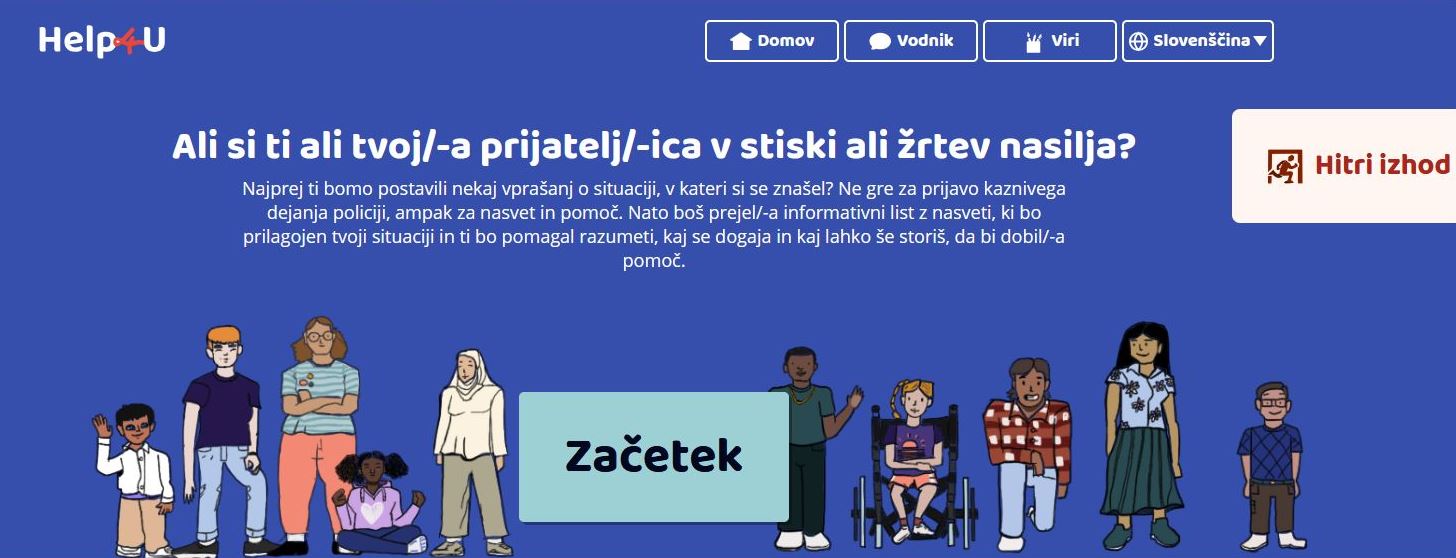
On 18 November 2025, a new digital platform Help4U, developed as part of EMPACT activities, was launched.
The website is interactive and guides users through a series of carefully tailored questions, each with several predefined answers. No data is stored in the system. Once the user (victim, supporter) has answered all the questions, the platform generates a personalised leaflet providing guidance on where to seek help, advice, and further support.
Link to Help4U online platform, active as of 18 November 2025: Help4U online platform