










News
Mission accomplished! No fatalities on Slovenian roads during Roadpol campaign on 17 September
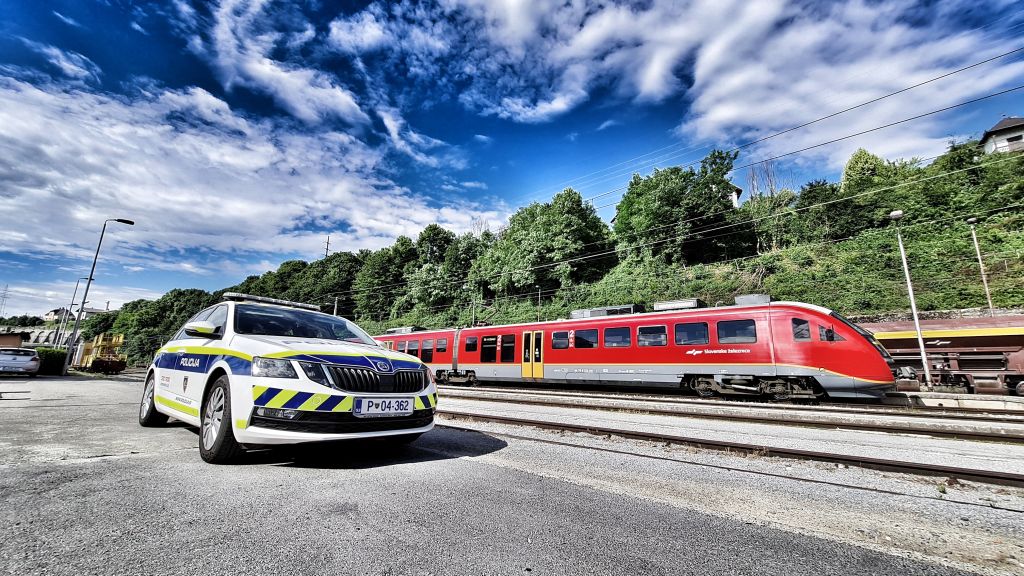
Rail Action Week. Activities to improve safety on railways are getting started

Two Croatian nationals suspected of the brutal murder of a 76-year-old man in Laško
European Mobility Week, the Vulnerable Road Users campaign, and traffic checks on motorways on Thursday – announcement
World Alzheimer's Month: Raising awareness of missing persons with dementia
The Slovenian police marks UN International Day of Police Cooperation
Apply covert police measures
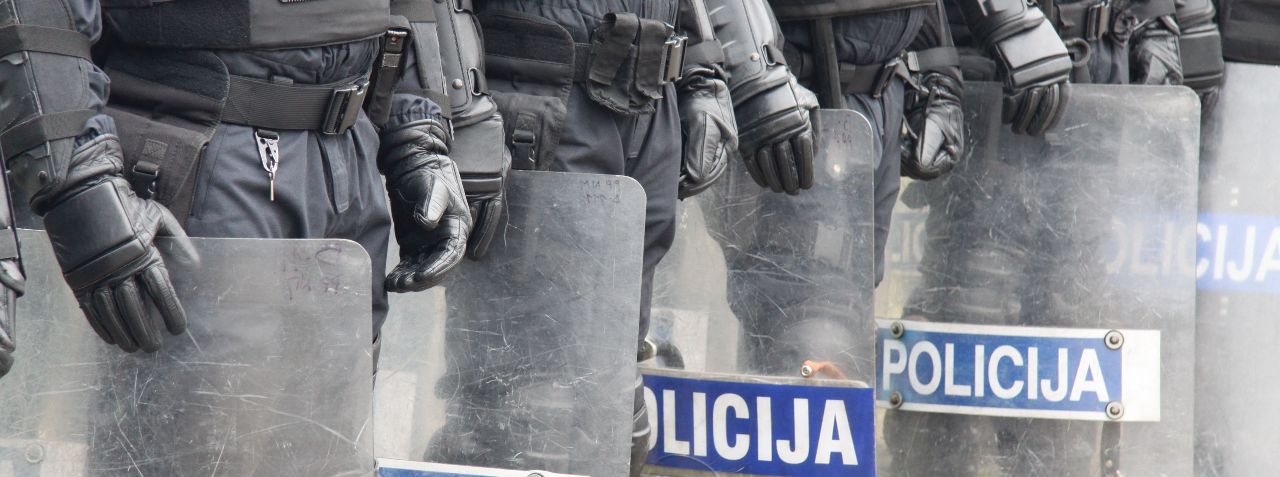
Instruments of restraint and the conditions for their use are defined in the Police Act. Instruments of restraint may only be used when a police officer while performing police tasks utilises one of the instruments defined by law for exercising direct control over an individual. Pursuant to the Police Act, the Police are entitled to use the following instruments of restraint when performing their tasks:
Make use of the nearest available transport and communications means
If no other option is available, the Police are entitled to utilise the nearest available transport or communications means in order to apprehend a perpetrator of a criminal offence, convey a person requiring emergency medical care to the nearest healthcare institution or perform other urgent tasks.
Enter a private residence and private premises
A police officer may only enter a person's residence or other premises without a court order on the basis of the provisions of the Criminal Procedure Act or Police Act.
Confiscate items
Police offers may confiscate items on the basis of a decision by a competent court or reasons defined by law (the legal basis for the seizure of objects is defined in the Criminal Procedure Act, Minor Offences Act and Police Act). Pursuant to the Criminal Procedure Act, the Police may in addition to items which must be confiscated pursuant to the Penal Code (e.g. counterfeit money, smuggled objects, illicit drugs, etc.) also seize items which could serve as evidence in a criminal procedure (items obtained through the committing of a criminal offence, items originating from a criminal offence or items used to commit a criminal offence as well as items bearing traces).
Apprehend, bring in and detain a person
ARREST is a police power giving a police officer the right to temporarily restrict the movement of a specific person with the intention of bringing him/her in, detaining him/her or for performing another action defined by law. Upon arrest, the police officer will also carry out a security search on the person.
Issue a restraining order prohibiting a person from approaching a particular place or person
If reasonable suspicion exists that a person has committed a criminal or minor offence involving violence or if a person has been caught in the act of committing such an offence and there are reasons to suspect that this person is about to endanger the life, personal safety or freedom of a person with whom he/she is or was in a close relationship, a police officer may order a RESTRAINING ORDER PROHIBITING THE PERSON FROM APPROACHING A PARTICULAR PLACE OR PERSON.
Exercise other powers prescribed by law
Conduct a security check
While performing police tasks, police officers may carry out a SECURITY SEARCH of persons, their possessions and transport means if there is reason to believe that the person in question might attack someone or harm himself/herself. The police officer will establish if the person is armed or carries other dangerous objects on his/her person. The police officer will perform a security search following each apprehension of the specified person. The security search is performed directly or with the aid of technical instruments.
Issue a summons
A SUMMONS is an official measure, whereby a police officer summons a person who could provide valuable information necessary to perform tasks defined by law.
Establish a person's identity and carry out an identification procedure
ESTABLISHING IDENTITY is a police power whereby a police officer establishes the identity of a specific individual (if the person providing identification is in actuality the person he/she asserts himself/herself to be) and such person's personal data.
Give orders
By issuing an ORDER, a police officer gives instructions and demands to take or not take actions and measures in order to protect human life and property against damage, destruction, theft and other forms of destructive behaviour, to guarantee traffic safety, prevent public unrest, riots and other forms of public order violations or to avert damage caused by natural and other disasters in accordance with decisions made by bodies competent for protection from natural and other disasters.
Issue warnings
A WARNING ranks as one of the mildest forms of police action. A warning can be either given orally or in written form, using technical devices or via public media. A warning must be short and clear and expressed in a clear unambiguous manner.
Police Powers
Police powers are legally prescribed measures which enable police officers to effectively and successfully perform their tasks.